 Reviews

 Proudly American

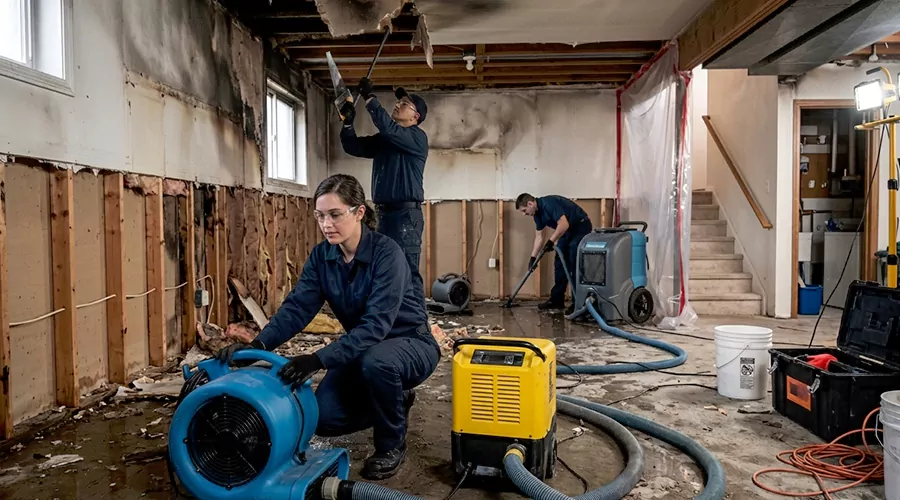
To repair fire damage in a home, the property must first be made safe before smoke residue or water damage is addressed and structural repairs begin. In 2026, residential fire restoration can range from about $3,083 to $52,031, with a national average near $27,477. Major structural losses can cost much more.
Fire damage rarely stops where the flames stopped. Smoke can move into adjoining rooms while firefighting water can soak floors or walls. Heat can also damage wiring and structural materials that still look intact. Fire and water restoration may be needed when both fire-related damage and water damage from firefighting efforts affect the property.
The correct order is important. Cleaning or rebuilding too early can hide moisture or smoke residue inside newly finished surfaces.
What Should You Do Before Repairing Fire Damage?
Fire repairs should not begin until local authorities have cleared the property for entry and obvious structural hazards have been checked. Fire can weaken floors or roof sections while damaged utility systems create separate risks. Initial documentation should also happen before burned materials are moved whenever conditions allow.
Start with these steps:
- Wait until the property is cleared for safe entry.
- Inspect the exterior before going inside.
- Stay away from sagging ceilings or unstable floors.
- Check for damaged utility lines.
- Photograph every affected room.
- Record smoke damage outside the burn area.
- Photograph water damage from firefighting.
- Keep damaged electrical equipment switched off.
- Separate unaffected belongings from damaged areas.
A jammed door should not be forced open after a serious fire because it may be supporting a damaged part of the structure. The Red Cross also recommends checking the exterior for damaged gas lines or foundation problems before entering.
Safety comes before cosmetic repairs. A wall that looks repairable can still contain heat-damaged wiring or weakened framing.
How to Repair Fire Damage Step by Step?
Fire damage repair follows a sequence that starts with assessment and cleanup before reconstruction begins. Water should be removed before wet materials are enclosed again. Smoke residue must also be addressed before new paint or drywall hides the affected surface. Structural rebuilding comes only after these earlier problems are controlled.
Step 1: Determine How Far the Damage Spread
Start by identifying every type of damage rather than looking only at burned surfaces. A fire can affect the structure through heat while smoke travels into rooms that never experienced flames.
Check for:
- Charred framing
- Burned drywall
- Melted materials
- Smoke staining
- Soot around vents
- Wet flooring
- Water-damaged walls
- Damaged windows
- Heat-damaged wiring
- Persistent smoke odor
Smoke can travel through openings and HVAC pathways. A kitchen fire may therefore leave residue in a hallway or bedroom even when those rooms show no burn marks.
Fire damage home repairs should be based on the whole affected area. Repairing only the room where the flames were visible can leave hidden smoke or moisture problems elsewhere.
Step 2: Secure Openings and Exposed Areas
Broken windows or roof damage can allow rain into a property after the fire is extinguished. Open exterior areas can also expose the interior to wind or debris.
Temporary protection may include:
- Covering damaged roof sections
- Securing broken windows
- Closing accessible exterior openings
- Restricting access to unstable rooms
- Protecting dry areas from debris
Temporary protection is different from permanent rebuilding. The purpose is to prevent new damage while the existing fire damage is assessed.
Keep receipts for emergency materials or temporary repairs when insurance may be involved. The Red Cross recommends saving these records after a home fire.
Step 3: Remove Water Left From Firefighting
Firefighting water should be addressed before walls or floors are rebuilt. Water can move beneath flooring or soak insulation after the flames are gone.
Start by checking:
- Carpet and padding
- Hardwood flooring
- Subfloors
- Lower drywall sections
- Wall insulation
- Cabinet bases
- Ceilings below the fire area
Standing water should be extracted when it is safe. Dehumidification and air movement can then help remove moisture that remains inside suitable building materials.
Water used during firefighting can create mold risk if materials stay wet. Current fire restoration guidance places water removal early in the process for this reason.
A counterintuitive part of repairing fire damage is that water can sometimes affect more square footage than the flames. A contained bedroom fire can still leave moisture in the hallway or floor below.
Step 4: Remove Materials That Cannot Be Repaired
Severely charred or physically weakened materials should not simply be covered with new finishes. Removing damaged material also exposes areas that need closer inspection.
Materials more likely to require replacement include:
- Deeply charred drywall
- Burned insulation
- Melted flooring
- Severely damaged cabinets
- Fire-damaged ceiling material
- Charred particleboard
- Structurally weakened wood
- Heat-deformed plastic materials
Removal should be selective. A surface with smoke residue may be cleanable even when a nearby burned section needs replacement.
Repairing a fire damaged house does not mean removing every material exposed to smoke. The decision should depend on structural condition and whether residue can be removed successfully.
Step 5: Remove Soot Before Rebuilding
Soot should be removed before new finishes are installed because residue can stain or continue producing odor. Loose soot should usually be controlled before wet cleaning begins since aggressive wiping can smear it across surfaces.
Areas that often need inspection include:
- Walls
- Ceilings
- Cabinet surfaces
- Door frames
- Windows
- Flooring
- HVAC registers
- Furniture
Avoid rubbing loose soot with bare hands. Fine residue can transfer to clean materials or become embedded in porous surfaces.
The Red Cross notes that soot can smear easily and may need specialized cleaners on affected walls or hard surfaces.
Fire and smoke damage repair should not move into the painting stage until surface contamination has been addressed.
Step 6: Deal With Persistent Smoke Odor
Smoke odor usually remains because residue is still present in a surface or material. Covering the smell with fragrance does not remove the source.
Inspect places where odor can remain:
- Insulation
- Upholstery
- Carpet
- Unfinished wood
- Cabinets
- Wall cavities
- HVAC components
- Stored fabrics
Clean or remove the source material before considering odor treatment. A room may smell better after ventilation but still contain residue.
Smoke damage from fire can extend into areas with no visible black staining. This is one reason odor that returns after several days deserves further inspection.
Step 7: Check Structural Wood Before Repairing Walls
Framing can survive some fires while other sections lose strength from deep charring. The condition of studs or joists must be understood before drywall covers them again.
Watch for:
- Deep charring
- Cracks in structural wood
- Warped framing
- Loose connections
- Sagging floor areas
- Movement around openings
- Roof deformation
- Burned support members
- New gaps between structural components
- Soft wood caused by firefighting water
Surface discoloration does not always mean a wood member must be replaced. Deep section loss is a different problem because it can reduce load capacity.
Fire damage reconstruction begins only after structural parts that remain in the home have been judged suitable for continued use.
What Parts of a Fire-Damaged Home May Need Repair?
Fire can affect structural components and interior finishes in different ways. Some items only require cleaning while other parts may need complete replacement. The repair scope should therefore separate smoke contamination from physical fire damage and moisture damage instead of treating the entire home as one type of loss.
| Home Component | Common Fire-Related Problem | Possible Repair |
|---|---|---|
| Drywall | Burning or heavy soot | Cleaning or replacement |
| Wood framing | Charring or heat damage | Reinforcement or replacement |
| Flooring | Burning or firefighting water | Drying or replacement |
| Insulation | Smoke odor or saturation | Removal and replacement |
| Cabinets | Soot or heat distortion | Cleaning or replacement |
| Windows | Heat-cracked glass | Glass or unit replacement |
| Electrical system | Melted insulation or heat exposure | Inspection and component replacement |
| HVAC system | Smoke and soot contamination | Cleaning or component repair |
| Roof | Burned decking or framing | Structural repair |
| Paint | Smoke staining | Cleaning and refinishing |
A material can suffer more than one type of damage. Flooring may survive direct flame exposure but still buckle because of water used to extinguish the fire.
This overlap explains why fire and water damage repair often occurs during the same recovery project.
Can Smoke-Damaged Drywall Be Repaired?
Smoke-damaged drywall can sometimes remain when the board is structurally sound and the residue can be removed from the surface. Replacement becomes more likely when drywall is burned or badly saturated by firefighting water. Persistent odor can also indicate that contamination has moved deeper into porous material.
Drywall is more likely to remain when:
- There is light surface staining.
- The board stays firm.
- No deep charring is present.
- Moisture readings return to normal.
- Smoke odor can be removed.
Replacement is more likely when:
- The paper face is burned.
- The gypsum has weakened.
- The board is badly swollen.
- Water has saturated the wall.
- Heavy odor remains after cleaning.
- Hidden insulation is also damaged.
Do not paint directly over heavy soot. Cleaning should happen first so residue does not interfere with the repair.
New drywall should also wait until framing has dried. Enclosing wet wood can trap moisture inside the wall.
Can Fire-Damaged Flooring Be Repaired?
Flooring can sometimes be repaired when the fire damage is shallow and the material remains structurally stable. Water damage often becomes the deciding factor after a fire because wood can swell while laminate can separate. Carpet can also hold smoke residue or contaminated firefighting water below its visible surface.
Hardwood
Hardwood may survive light smoke exposure after careful cleaning. Boards affected by water should be allowed to stabilize before cosmetic refinishing begins.
Replacement becomes more likely when boards are deeply burned or permanently distorted.
Carpet
Carpet can absorb smoke odor quickly. Padding underneath may also hold firefighting water long after the carpet surface feels dry.
Heavily burned or contaminated carpet is unlikely to be suitable for normal repair.
Tile
Ceramic tile handles heat better than many flooring materials. However, extreme temperature changes can crack individual tiles or weaken the material underneath.
The finished tile may look intact while the subfloor below requires repair.
What Is the Safe DIY Check Before Repairs Begin?
After the property has been cleared for entry, a safe DIY check is to document visible changes without opening walls or disturbing burned structural materials. Compare rooms near the fire with unaffected rooms. Look for residue around vents or water staining below the original fire area.
Use a flashlight and inspect:
- Ceilings for sagging
- Walls for new cracks
- Floors for buckling
- Trim for heat distortion
- Vents for soot
- Drywall for moisture stains
- Cabinets for smoke odor
- Windows for heat cracks
Take photos instead of scraping or cutting into questionable materials.
Do not test damaged electrical outlets yourself. Avoid climbing into burned attic areas or walking on questionable roof sections.
The purpose of this check is to identify patterns. It is not meant to prove that structural or electrical systems are safe.
How Long Does Fire Damage Repair Take?
Fire damage repair can take from about two weeks for a limited loss to 12 months for major reconstruction. Current 2026 estimates place the average overall restoration timeline near four months. Drying or smoke treatment can add time before structural rebuilding starts.
A general timeline looks like this:
| Damage Level | Typical Repair Time |
|---|---|
| Minor smoke damage | About 1 to 2 weeks |
| One-room fire with limited repairs | Several weeks |
| Moderate structural damage | About 1 to 4 months |
| Major multi-room fire | Several months |
| Large structural rebuild | Up to 12 months or longer |
The repair stage should not be rushed to meet a calendar. Water-soaked structural material may need more drying time before walls are closed.
Permit requirements can also extend the timeline when structural or electrical systems need major reconstruction.
Fire damage reconstruction takes longer than smoke cleanup because damaged building components must be rebuilt and inspected before finishes are completed.
How Much Does Fire Damage Repair Cost in 2026?
Fire damage repair cost depends on the affected square footage and the amount of structural rebuilding required. Current 2026 national data puts average restoration near $27,477. Most projects fall between about $3,083 and $52,031 while severe structural losses can reach $180,000.
Current national estimates include:
| Repair or Restoration Item | Typical 2026 Cost |
|---|---|
| Fire restoration overall | $3,083 to $52,031 |
| Water damage after a fire | $1,000 to $6,000 |
| Soot removal | $2,000 to $6,000 |
| Typical structural restoration | $4 to $7 per sq. ft. |
| Major severe loss | Up to $180,000 |
A 2,000-square-foot home does not automatically require repairs across all 2,000 square feet. Cost depends on the area that actually needs cleaning or reconstruction.
Current data also shows labor can account for roughly 50 to 70 percent of a restoration budget. Complex structural work therefore raises costs even when replacement materials themselves are not unusually expensive.
Kitchen fire damage repair can be expensive relative to the burn area because cabinets or appliances may be close to the source. Smoke can also spread through connected living areas.
What Warning Signs Mean Repairs Are More Serious?
Fire damage becomes more serious when structural movement or widespread smoke contamination appears outside the original burn area. Water trapped inside walls can create another layer of damage. The safest repair plan changes when several warning signs appear together rather than one cosmetic stain occurring alone.
Look for these 10 warning signs:
- Floors feel unstable underfoot.
- Ceiling sections begin sagging.
- Roof lines appear distorted.
- Structural framing has deep char.
- New cracks appear around doors.
- Electrical components show heat damage.
- Heavy soot covers several rooms.
- Water remains inside wall cavities.
- Smoke odor returns after cleaning.
- HVAC vents continue releasing smoky odor.
Fire damage house repair becomes more involved when structural components are affected. Cosmetic finishes cannot correct weakened framing.
A recurring smoky smell can also indicate hidden contamination even when new paint makes the room look finished.
When Should You Call a Professional?
Professional help is appropriate when fire has affected structural framing or electrical systems. Heavy soot throughout several rooms also requires stronger contamination control. Water trapped inside walls can create another reason for specialized assessment. Repairs should stop when the condition of structural materials cannot be confirmed safely.
Consider professional assessment when:
- Structural wood is deeply charred.
- Roof framing has burned.
- Floors or ceilings are unstable.
- Electrical wiring was exposed to heat.
- Several rooms contain heavy soot.
- Smoke entered the HVAC system.
- Firefighting water soaked wall cavities.
- Insulation is contaminated.
- Large sections of drywall need replacement.
- Persistent smoke odor remains after cleaning.
- Major contents require specialized treatment.
- Building permits are needed for reconstruction.
Fire and smoke damage repair may involve different trades during reconstruction. Structural work and electrical work should be addressed according to the damage found.
A fire damage repair service can also help determine which materials should remain and which should be removed. This matters when the damage extends beyond the visible burn area.
Fire damage repair and restoration are complete only when the structure is dry and repaired without unresolved smoke contamination.
How Can You Prevent Problems After Fire Repairs?
A repaired home should be checked for the same conditions that contributed to the original fire and for problems created during the loss. Smoke alarms should be tested regularly while electrical repairs should remain accessible for required inspection. Moisture-prone areas should also be watched after firefighting water has dried.
A practical maintenance plan includes:
- Test smoke alarms every month.
- Replace alarm batteries as required.
- Keep cooking areas clear of combustible materials.
- Clean dryer lint after every load.
- Inspect electrical cords for damage.
- Avoid overloading electrical outlets.
- Keep portable heaters away from combustibles.
- Check repaired ceilings for water stains.
- Watch rebuilt areas for smoke odor.
- Keep fire extinguishers accessible.
The National Fire Protection Association recommends installing smoke alarms inside bedrooms and outside sleeping areas. Alarms should also be present on every level of the home.
A repaired room should not be treated as finished if moisture stains or smoke odor return. Those signs deserve investigation before they create another repair cycle.
Conclusion
Repairing fire damage in a home requires the right sequence. Confirm safety first and remove water or smoke residue before structural rebuilding begins. Floors or walls should not be closed while hidden moisture remains. Severe charring and electrical damage require deeper assessment. This week, test every smoke alarm in your home and check that escape routes remain clear for everyone who lives there.
Frequently Asked Questions
Can a fire-damaged house be repaired?
Yes. Many fire-damaged homes can be repaired when enough of the structure remains sound. Severe losses may require partial or extensive reconstruction instead.
Can you repair walls that have smoke damage?
Yes, when the drywall remains structurally sound. Heavy soot must be cleaned first while burned or badly saturated drywall may need replacement.
Should you replace insulation after a fire?
Replacement is more likely when insulation is burned or saturated with water. Smoke odor trapped deeply in insulation can also make reuse difficult.
Can hardwood floors survive a house fire?
Some hardwood floors can be restored after light smoke or water exposure. Deep burning and severe warping make board replacement more likely.
Can you rebuild immediately after fire cleanup?
Not always. Wet structural materials must dry first and damaged systems need inspection before new walls or flooring cover them.
Is smoke damage considered part of fire damage repair?
Yes. Smoke and soot can affect areas far beyond the flames, so cleaning those surfaces is often part of the overall repair process.